Friday creative writing exercises

Hi

Today’s creative writing exercises come to you from my walk in the local park! I thought I’d try something new this week and record the exercises on a nature walk.  Also you’ve been working hard at developing your work so this week is all about being relaxed and inspired to come on a walk with me and if you can write about  from what you see/hear/experience on your own trips out. 

Let’s go into the woods!
It’s a little bit quiet so turn the volume up!!

The exercises are :

To free write and pause the video if you feel inspired.

To write 3 similies about the tree/trees – e.g. The tree is like a …. (rocket) or The tree is as ….as a ….. (the tree is as tall as a candle)

To write 3 metaphors for ivy – e.g. The ivy is a carpet of dragon scales

To free write from the title – ‘Lost in the Woods’ for up to 5 mins.

Equally you could do this on your own walks, wherever they are. Take a notebook with you and when you see something interesting, stop and write down what it reminds you of, describe it or write whatever springs to mind.

Happy walking/writing!

Rachel

Creative Writing exercises using myths.

Hi everyone – happy Friday!

I’ve been doing a lot of planning and writing recently and I have news – I have a new poetry book out called ‘Harpy’ which is all about the cross over between the personal and mythical www.palewellpress.co.uk

Harpy - front cover
My new poetry book

Coincidentally I’ve also been reading a really great book called Circe by Madeline Miller which I recommend if you like Greek myths. It got me thinking how fresh even the oldest stories can be when you approach them from the perspective of an unusual character.

TASK:

Your exercise for the next two weeks is to play around with ancient stories in order to write your own version. Choose a myth you know well and retell it or find a new story that you don’t know and retell it your way.

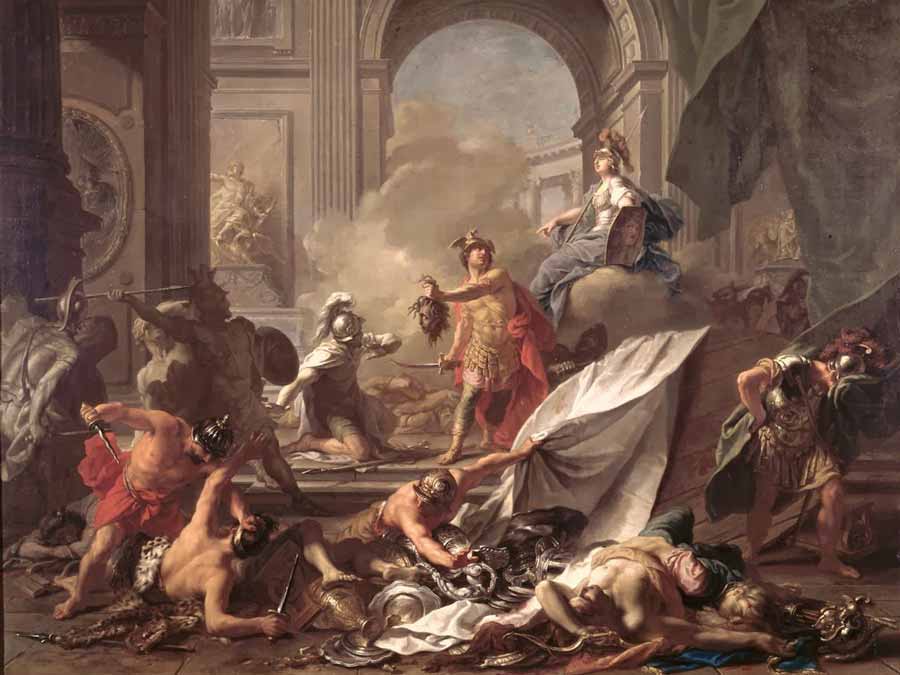
You could retell it from the point of view of an unusual character. You might want to tell the tale of the Minotaur from the monster’s point of view, or Medusa from Medusa’s point of view, or update the myth – Pandora’s Box if it was today and hidden in a wardrobe.

Here are links to some greek myths abridged or a video of norse mythology. You might prefer to choose a fairytale you know well and retell it. What about Cinderella updated? Or Red Riding Hood from the point of view of the wolf? Margaret Attwood says to try starting stories in different places as well ‘It was dark inside the wolf’ is her example, as in what if Red Riding Hood was told from the point of view of the grandma after she’d been swallowed. You might then need flashbacks to tell the story.

So in short – do a little bit of research to remind yourself or learn a new myth. A classic tale that has been retold throughout history. Choose it and consider how you might retell it.

Ask yourself:

# Who’s point of view is it told from? Who is the main character in your version?

# What are the key elements of the story that you can’t change – e.g. In Theseus and the Minotaur there has to be a labyrinth and a Minotaur or else it’s the story of a man fighting a bull in a field. Those are key elements. In Cinderella she has to start off poor, meet the prince and in the kitchen then be rich at the end and live happily ever after. You could change the pumpkin into a sainsbury’s bag, but it would still need to be transformed by a fairy godmother (who could be a magical supermarket assistant). List them to help you retell the story.

# Have fun with it! The elements of the story are all there for you, change as much or as little as you want. It’s an exercise in telling a story that has already given you the plot so the pressure is off!

If you want any encouragement, think about this – the first book ever written in England was Beowulf between the 8th and 11th century from a story retold and retold in the oral tradition. When we tell stories even if we think we make them up they say there are only a few basic story types. I’ll go into that more in future blogs over the summer but for now – take an ancient story and retell it as if we are around the campfire listening to your version of events.

30 of the Most Famous Tales from Greek Mythology
Medusa

Looking forward to reading the results!

p.s. Option – If you want you could record your telling and send me the mp3 for posting on here. You might find writing it down first makes it easier to follow.

See you soon – Rachel x

Friday reading

Hi everyone, lots of reading this week from our awesome group members – I’ve had a few emails in so if you think you’ve sent me something that hasn’t featured, please let me know and I’ll post it up next week. Today’s reading comes from Adeline and Liz.

This week Adeline has been doing some fabulous poems including this one which says so much about Lockdown feelings – well done!

Life is in Lockdown by Adeline

Life can seem a series of puzzles
The twists and turns, problems and delays
Who would have guessed a year ago
Corono virus would come our way.
Life is in Lockdown

We took for granted our busy lives
So much to do, so much to see
In the wink of an eye we were cut off
Changes imposed by the powers that be
Life is in Lockdown

Sometimes I feel sad and lonely
Social life on hold, feel dejected
Phone calls, Emails, WhatsApp, Texts
Always connecting but not connected.
Life is in Lockdown

Maybe it is time to take a cue
From Mother Natures onward mission
Ploughing on through the seasons
Regardless of the human condition
Oblivious to Lockdown

The birds in the sky alive and free
Swooping, swirling, chattering in the trees
Their normal behaviour does not change
Bickering, speed dating, amongst the leaves
Oblivious to lockdown

Squirrels with their bushy tails
Scurrying here, there and everywhere
Running, jumping, foraging for food
Life without a care
Oblivious to lockdown

The seasons will always change
The trees will unfurl their leaves
The blossoms will always grow
Nature ploughs onwards
Oblivious to lockdown

I take this as a message of Hope
This time will pass
We will see our friends and families again
Life will continue
No more Lockdown

Next up are three pieces on the theme of Twist by Liz.

The twist 1

 Ray was musing over a pint in a quiet pub.   It was his weekly extravagance.   He was saving up hard to send his daughter to summer school and was working in London on a well-paid six months’ commission to hasten the accumulation of funds.   To be away from home, for Ray, meant carrying a knife in his heart.   He was coping OK, as long as he didn’t think of home or look at the photos in his billfold. 

He loved his wife Renata and three children Tom, Candy and Kerry.   They had a good life, living in a nice house, but they didn’t have luxuries.  The nearest they got to that was a meal in McDonald’s every Friday.   That was the treat of the week.  They were rich in other ways Ray thought.   Renata cared for the home;  she cleaned, polished, and looked after the family.   The problem was, that although they had a nice house, the local school was dire.   All they could do about that was to be enthusiastic parents and participate as much as possible.   Not that it made any discernible difference.   Tom at 17 was off the rails, currently in Juvenile Correction.

Ray was determined that Candy and Kerry should have some recognition for being sunny, well-balanced kids, causing no trouble at all.   Candy had been longing for ages to join her friends at summer school and, this year, despite it being  horrendously expensive, she could go.   Surprisingly, quiet, nine-year old Kerry was doing well with good marks on his record cards.   He deserved a better  education, but private school was not even to be thought about, it was way beyond his means. Caught off-guard, dreaming of home, Ray reached for his wallet and took out his photos.   As he looked at Kerry’s innocent face, shyly looking up at him, he felt the knife twist.      

The Twist 2

Her mother was fussing about cleaning.   “You should get up early and do two hours’ work before Alistair wakes up.   This mess is disgusting.   Both your sisters can manage a clean house, entertain, and care for their children”.    Amanda, having heard it all before, barely listened.   She intended to carry on idling the mornings away.   She didn’t care about her sisters’ lives, but she did envy them their skiing holidays.   She loved skiing.

In the afternoons she went out.   She wore floaty frocks and high heels.   She dressed her daughters in little silk dresses, and then pushed the buggy to the park, the coffee shop, or to meet friends.  

She devoted the evenings to Ali.   He said it was time to invite his boss and wife to dinner.  Amanda thought a better idea was a barbecue party as she wouldn’t have to attend to the house or cook.     Her mother said she was lazy, her sisters would have prepared a formal dinner.   Amanda was rather pleased when her mother mentioned that neither of them could afford a winter holiday this year.

 There were about a dozen guests.   The evening was warm, the garden magical under fairy lights, and heady with scent of nicotiana and roses.  Ali was a magnificent host, king of the barbecue, generous with the drinks.   Amanda, highly socially adept, enchanted the boss, wife and everybody else as she went about her hostess duties.  The evening was a success.

Later in the year the boss told Ali how much he and his wife had enjoyed their garden party, and he wondered if he and Amanda would like the use of their chalet in Chamonix for a winter break.   ‘Would they’, thought Amanda, ‘too right’.    Her mother was incensed.   She didn’t deserve it she said.

The Twist 3

The Twist
She sat in the departure lounge and thought of her husband at home, believing she was visiting her mother, when actually she was on her way to meet the love of her life. She met him months ago in a pub. He began talking casually at first but as the weeks went by a relationship developed. He was charismatic and she became in thrall to him. The attraction seemed mutual and he suggested, outrageously, that they take a week’s holiday in Andalusia. A gift from him to her.
On the flight she explored her feelings. She had met her husband in the course of work. Although he was generous, tolerant and home-loving, she found him tedious. She didn’t intend to be indebted to him for the rest of her life, but she didn’t intend to jeopardise her marriage unnecessarily either. She was getting ahead of herself. She didn’t really know much about her new man except he was divorced.
Upon checking into the hotel she was in raptures. The Parador was a conversion from an ancient monastery, beautiful beyond words. The lover proved endlessly attentive and endlessly inventive.
She was utterly beguiled; he was the man of her dreams. He began to suggest plans for a shared future. She smothered any pangs of conscience over her husband and held her breath.
On the last day he went to settle the bill. She awaited his return, and waited, and waited. She went to look for him and he was nowhere to be seen. Of course. She knew in one horrendous flash that she had been ‘conned’. Her cards were missing, her trinkets and cash gone, the hotel bill due.
All she had left was her ticket home. She opened the front door expecting to see her husband coming to greet her. Instead she saw papers lying upon the hall table. She recognised them immediately, they were divorce papers.  

Thanks so much for reading and I’ll see you next week for more exercises!

Friday reading and development

Hi – following last week’s gentle encouragement to develop your work further, I am going to post some development exercises.

The Haiku is a Japanese traditional form of poetry that takes a short three line poem into a set sequence of syllables 5/7/5. We’ve tried these in the past and they are a challenge, but also can be simple to attempt. As they are so short, it can feel less daunting to approach them than a longer piece of work. But after you’ve made one haiku – what then?

As a starting point for development, have a think about a theme that your haiku brings up – what is it about? Then write a few more without paying attention to syllables on the same theme (so just 3 lines), then choose your favourites and try to fit them to the syllables. 


e.g. Theme : WRITING

My first example Haiku (following the 5/7/5 form)

My pen to paper 

I follow the dotted lines

Draw in my feelings

Then just off the top of my head, writing 3 lines that don’t fit the syllables. You can do this a few times. 


I write everyday keep the doctor away
I am always writing
Sometimes seeing is writing

And now I change it to fit the syllables:  (Also you don’t have to do this step if you don’t want to!!) 


I write every day
To keep the doctor away
Seeing is writing


I mean it doesn’t make much sense but it’s another haiku on the same theme and the aim is to write as many as you can on the same theme in order to choose your favourites and hone them.

After you’ve written your ‘draft’ haiku, you can go back and tweak words. Instead of write, I might put ‘scribe’ or ‘sketch’ or use ‘tell stories’ or something else entirely different. And you can play with syllables too:

For example – an edit from the previous ‘draft’ haiku

Walking words on a page
Keep the doctor at bay
What I see is what I say

Whichever form you try, play around with it and see how it makes you feel – a good rule of thumb is that if it is making you feel or think something then the reader probably will too.

READING – ADELINE’S HAIKU ON THE TWIST

Adeline played with the haiku form and the theme of The Twist, to create a sequence of three line poems/haiku that ask us what The Twist means to us as well as to her.

Haiku poems about The Twist 

The Twist is a word

Which can have many meanings

Which one shall I choose?

It can mean a dance

Twist to the left, to the right

Dance to the music

Maybe it could mean

A twist to a tale, perhaps

An unusual ending

Or, a curly tail

On a pig for example

Or a little pug dog

Or a twist of fate

An unexpected outcome

To something planned

Or a twist of salt,

to sprinkle in a Crisps bag

Crunchy and tasty

Friday Creative Writing exercises

Hi everyone, it’s a mixed bag of weather this week and shops are opening up so there’s all kinds of chaotic energy around the place. Finding space to write can be difficult – not just physical space, but feeling mentally ready and emotionally in the right place. Many writers will talk about having to just sit down and do it and I often mention ways to get started if you feel stuck – but what is it supposed to feel like?

The best way to describe the joy of writing, is like art or any other creative activity, when you feel fully present and in the flow. Flow (sometimes described as being ‘in the zone’) is a documented state that is when it feels as if time has flown by and you are so immersed in what you are doing that you hardly notice the world around you. In order to get ourselves into this, we can use meditation or mindfulness. Or just trigger ourselves with little rituals – a cup of coffee, particular music etc. What is your best writing place and state? Do you enjoy the distraction of the radio in the background and people around you, or do you prefer silence and solitude.

Exercise 1 – take a moment to imagine your perfect writing space – what does it look like? What can you see? Hear? Smell (if there is a smell) Taste (if you write with food/drink perhaps) Touch (do you prefer to type or write with a pen and paper?)

I am now consigned to the bedroom (as the only place I can shut the door), but I have changed my writing tools so even if I can’t have my ideal space to write, I use different ways of writing. For example, I bought yellow legal pads to write longhand, in the tradition of american writers of the 50s and 60s as they were some of my favourites. I then type it up as if I am my own secretary, and as I type up I add embellishments and phrases. This leads to lots of new ideas and one page on a yellow pad can become many more as I type it up.

Exercise 2 – So now you are placed at least in your imagination, in the perfect space. (I think mine would be a campervan/caravan, in the open air but undisturbed, the only sound that of birdsong and trees rustling or waves if I got to the shore!) Take a few moments before writing to turn your attention within. Breath and spend 1 minute focussing on your breathing. Another minute checking how you are feeling in your body and one last minute asking yourself the five W’s What/Where/When/Who/Why

‘What do I want to write today? Who – What characters want me to write about them? Where are they? When are they existing? (What time in history, now, in the past or the future) Why am I writing this?’ You might get answers to these questions or none. Now go to write – if you can’t think of anything just try this small exercise: Write 10 questions. Do not answer them.

Exercise 3: The Challenge: We’ve been writing for a few months now and I’d like to give you an extension exercise if you want to (this is completely voluntary and only if you are up for a challenge). I would like you to choose from the following three choices to write – you are going to take up to the next month to complete this exercise and when you’ve finished your draft, I’d like you to send it to me for feedback for you to improve it. This is the part of writing that people don’t talk about much but takes up most time! Rewriting. I’ll do more exercises about rewriting next time. You can choose a piece of writing you’ve already done but it should follow one of these criteria:

  1. A 2000 word story
  2. A 20 line poem in free verse or a series of 6 haiku ( the 3 line poem of 5 syllables/7 syllables/5 syllables)
  3. 3 pieces of flash fiction of 300 words each. They can be linked or not.

The title is ‘The Twist’

All the best for a wonderful fortnight, see you soon!! Rachel xx

Today’s reading comes from Angela, it was in response to the recorded exercise I did a couple of weeks ago – do send anything in even if it’s from an exercise from weeks back. I love to read your work and it’s awesome to share it! Angela’s piece reads as if it’s part of a much longer work and is wonderfully descriptive.

Voice Activity by Angela

There was a stunned silence and no-one moved. It was as if the whole world had halted. We had arrived at our holiday gîte. The old stone house was standing in tall grass close by trees rustling in the breeze.  Nearby an azure pool glimmered invitingly in the sun. Here was where I would be living for the next two weeks.  There was silence, only the occasional singing of birds and the light breeze whispering through the grass. The smell of lavender wafted across the gardens and my eye was drawn to the purple haze of fields in my surroundings.

I hurried to the first floor and on turning at the landing was met by a strange sight.  The wall was covered with pictures of race horses. On closer investigation, the horses were winners of faces long ago.  I could tell by the costumes and hats of the crowds.  Who could these photographs have belonged to?  Why were they here? Did the owner’s family train horses? The images reminded me of the artist Degas’ paintings capturing the speed and excitement of the race and the horses reaching the finishing post with their jockeys’ madly urging their horse on and on.

He said, “You’ve got to enjoy yourself. The evening’s the best part of the day.”  Monsieur Robert, the owner was downstairs explaining to the family.  We quickly understood why when we stepped outside onto the “terrasse”. A wrought iron bistro table stood. It was intricately decorated with citrus mosaics and accompanied by four classic French bistro style chairs. The most incredible view was seen – across the pattern of fields and meadows we could ss as far as the dark distant hills. We all fell silent in awe of the expanse of countryside so welcome after a long car journey from the coast.  Our route had meandered down narrow roads through deserted villages until our arrival at Belcastel, Midi-Pyrénées.

Friday reading

Hi everyone just a quick one from me today – I’m posting up the lovely writing I’ve been sent. Big round of applause to Adeline for being so creative and experimental and Liz for the plethora of writing she’s sent through! I love to hear from you all so if you are a bit stuck or feel like you don’t have enough time to write just drop me a line for me to suggest something or just to let me know you’re reading and enjoying the blog. See you next week with more exercises x Rachel

Adeline’s cut up version of ‘An Old Woman of the Roads’ puts home in the centre and repeats the weather words, as if this is the woman’s dream – we could be listening to her inner voice as she dreams of a home.’

Liz writes this week of a more contemporary happening – based on the unrest in the centre of London, she focusses on ‘The Horse’.

The Horse

There was a stunned silence and no one moved.    A flare had been thrown and a firecracker jumped.     Suddenly bottles and missiles were flying about.   It frightened me so much that my woman police officer fell from my back to the ground.   All mayhem broke out.    I was riderless, and panicking;  panicking so much I turned and bolted back along the road amid the frantically scattering people.    I somehow ran onto a pavement and was blocked by railings.    Several people fell over in the melee around me.   I turned and galloped back again and saw my wpc lying on the road being tended by policemen.   I started to gradually slow down and eventually was able to recollect my thoughts and my dignity and trot back to the barracks by myself.

I hurried up the ramp to the first floor level of stabling and on turning at the top was met by a strange sight.   All the grooms and stable lads were gathered outside my stall excitedly talking among themselves and into their phones.   They looked utterly amazed and astonished when they saw me.    Then they jumped up and down with glee and emitted gales of laughter which went on and on.   I ignored them and walked into my home.    Within a few minutes they came to stroke me, talk to me, caress me, and fill my water holder with fresh clear sparkling water.   They kept asking, ‘what happened’, what happened’?, as if I could speak to them.

Later on I thought  ‘well, what did happen’?, and in my mind I retraced the afternoon.   I was extra specially groomed, my coat burnished to the highest possible  gloss, and with my smart wpc rider, wearing her yellow hi-viz vest, we joined the line formation spreading right across the road.   We were a splendid sight.   People always admired us.   Many has been the time that I have stood for photographs, from this angle and that angle, until I have had to stifle a yawn.   But I digress.   The line of police horses walked sedately and slowly.   There were hundreds and hundreds of people, wearing masks, thronging and filling the roads and pavements.   They were holding banners and placards and rhythmically chanting as they walked.   There were many in front of our line and many behind.    Quite a long way further ahead I could glimpse the forward line of police horses and riders moving calmly along at a slow pace.   The sun was shining, the people were  walking between the lines of horses and all was orderly.   At least it was for a long time, but then, surprisingly, new people joined the march, and they began behaving badly causing violence, such violence.    It was absolutely shocking.   So shocking it caused me to run amok.   That was what happened.         

When the groom came later with my oats, he brought treats, and he stroked and patted me and he said, ‘you’ve got to enjoy yourself the evening’s the best part of the day’.

Friday reading/writing

Hi everyone – the weather has changed but we’re still going! Some lovely pieces this week from Adeline and Liz – you are doing brilliantly!

As an exercise in creativity, I made a picture poem for a ‘zine’ (a mini magazine). You might like to have a go yourself. Take a piece of writing and print it off (or hand write it) then cut into sections randomly or in verses. Stick it to a picture you have drawn in response to the writing. The idea of this is to be very free with your creativity. I cut up the poem, photocopied it, then wrote over it in blue pen, then typed out the poem and stuck it to the picture – so it’s a 3 layered poem! I’m not sure of the result but it’s fun to do. You could try sticking cut ups to a magazine page or newspaper. Cutting up newspaper articles and finding poetry or stories in the words. Be as free as you like.

Cut up picture poem ‘On overhearing from a window sales person that Boris wants us to spend money’ by Rachel Sambrooks

See you next week! – Now for some reading from Liz and Adeline:

Alice by Liz – from the exercise on moving through the ages.

1936      Jane was sitting at the kitchen table, sucking her thumb and doing colouring-in.   Her older sisters, Alice, Margaret and Louise and her younger brother Jeremy were all in the house following their various occupations.   There was talk of war on the wireless, and between the adults.   Her parents were saying that the basements which ran under all the tall London houses in their crescent could be linked by removing some bricks in the dividing walls.   They would serve as more than adequate air raid shelters.   

1944/5  Jane was doing homework at the kitchen table.   Alice and her mother were around and about doing chores.   The afternoon was turning into evening and Jane was afraid of the doodlebugs. Suddenly the wailing of the air raid siren pierced the air.   The family gathered quickly in the kitchen and went down to the basement one by one.    It was furnished with small beds, camp beds, blow-up beds and a large variety of old blankets and pillows.    Jane hated the dank, dark basement and she hated the bed.   It was too short and narrow.   Gradually the cellar filled up with neighbours who always came and squeezed into their area.   The conversation between the adults was low and continuous.   A droning aircraft could be heard above followed by an ominous silence.   They all began counting in their heads.   One, two,  three, all the way up to nine.    Ears were covered but still they heard the almighty ‘crump’.    Then there was a collective sigh of relief.   The bomb hadn’t dropped on them.    In the morning Jane was shaken awake to go upstairs and get ready for school.   And all the days and nights went on like this day after day.   

One afternoon Jane was doing homework at the kitchen table and Alice said she was going down to the basement to get some rags with which to wash the kitchen and scullery floors.   Alice knew she had seen a stack of them there.   Alice walked across the basement and climbed through to the adjoining area and the one after that before she found what she wanted.   A soft rustling sound made her turn.    She became alert.    She berated herself for unease and clambered through the next wall to check.   When she straightened up she froze in utter horror.   There were two men standing in the space.    They froze too.   Slowly she came to realise they looked just as frightened as she was.   One man moved fractionally forward and said in accented English, ‘ bread, water’.    Tremblingly he said, ‘don’t tell, no intern, no intern, don’t tell’.    The pair of them were dirty, dishevelled, gaunt and wild-eyed.   Alice recognised the dark green uniform.   She said ‘I will try’, turned and retraced her steps with a hammering heart.   

Jane was still studying at the kitchen table.   She was surprised to see Alice take a whole loaf from the larder.    Despite rationing they were always allowed to take a slice of bread and jam any time they wanted, but not a whole loaf.   Later in the day, when her mother queried why there was only one loaf, Alice said that Jeremy had taken it to the garden and reduced it to a crumbly nothing.    Jane was outraged.   Jeremy had been upstairs building his Meccano all afternoon and hadn’t taken anything.   What a big fib, what a whopper, she thought and returned to her history book.   Another time she saw Alice turn out a whole cupboard to find an old, battered Thermos flask.   She supposed Alice wanted it for when she went to the office to help their parents.   She thought Alice was becoming funny because sometimes she didn’t want her dinner and asked for it to be put aside so  she could warm it up later.   She often took two apples instead of one and on one occasion she even saw her raid Jeremy’s sweet tin.    

When Alice went to the basement next she led the two men right through to the very end of the crescent where the occupants had fled to the countryside long ago.   She learned the two men’s names.   Alice knew that German paratroopers were known colloquially as ‘green devils’.   Green devils, she queried, they were Otto and Gustav and they were nineteen years old.   She herself was eighteen.

Alice wrote a letter to be opened if anything happened to her and gave it to Margaret.   She said, ‘why don’t you write one too’, to make a game of it.   So Margaret did and put it with Alice’s.   Louise wrote one and Alice said, ‘you write one too, Jane’ and they all found it an episode of fun.

 One day, Jane, sitting reading at the kitchen table, heard her mother say to Alice she could go to buy her new summer dress today.   They had enough clothing coupons now.   Her mother said don’t buy too bright a colour but don’t buy a dark, dreary one either.   She said check the quality of the fabric, and the seams, and make sure it’s a proper fit.   As Alice was having to go on a bus to the main high street, and not the local shopping parades, she suggested Alice could buy a cup of tea and scone in the British Restaurant.   And so it went on and on until Jane nearly fell asleep with boredom.     After Alice departed Jane went back to her book and her mother continued her chores.    A couple of hours later they heard an explosion.   The house rattled and shivered.    It transpired a bomb had dropped on the high street wiping it out from end to end.   Alice’s body was pulled from the rubble of the Department store.   In an irony of fate, 2 days later, 8th May 1945, VE Day was announced.  The war had ended.

1960    Jane, still living in the family home, returned after the pandemonium of getting her children to the school gates on time.   She made a cup of coffee and began to read the paper when the post fell on the mat in the hall.   She looked at the envelopes and one seemed rather different.   She opened it.   The letter began ‘dear Alice’ and a Gustav and Otto wanted to tell her that they were in the vicinity and would call at the house this afternoon.   They apologised for the unannounced intrusion.   Jane was astounded.   What on earth could this be all about?   When they came she took them around the house to the garden where she served them tea at the garden table.   She said Alice is not here and they told her their story of spending 7 days in the cellar.   And for Jane, the episodes of loaf, apples, sweets and dinners suddenly made sense.   She told them that Alice had been killed by a direct bomb from a Messerschmitt aimed at the shopping area, and they said how very sorry they were, and that it explained why her sister had come to them the last couple of  days.    They left with courteous words, and Jane experienced a sudden kaleidoscopic memory of Alice singing along to Workers’ Playtime, hanging out the laundry, playing endless games of noughts and crosses with her, and furtively stealing the rock buns.                            

Adeline’s flash fiction from exercises on combining names with objects and setting.

Paragraph 1

There was a stunned silence and no one moved. Grandfather George’s precious porcelain vase lay in pieces on the floor. Alfie was mortified. His clumsy fall had knocked it off the shelf where it had sat in proud position for many years. His Grandmother had carefully dusted it over the years, and even when Grandfather George had passed away many years ago she did not fail to dust it each week. Alfie was so sorry and tried to think of a way to say he was sorry. He visited his Grandmother more often, instead of the usual once a month when he was in the area.  He brought her flowers and sometimes took her to the local tea shop for afternoon tea. Instead of quick visits Alfie started enjoying spending time with his Grandmother. One afternoon when they were at the tea shop having the usual afternoon tea, Grandmother give Alfie a little secret smile. “What are you smiling about, Alfie asked

 “I am going to tell you a little secret Alfie” said his Grandmother. “I never liked that porcelain vase and to tell you the truth I was glad when it was broken, as it meant I did not have to clean and dust it every week. I did not feel I could get rid of it, so in reality you did me a favour. I did not tell you sooner though as I have been enjoying your visits and how you have been spoiling me. “You crafty old devil” Alfie laughed. 

Paragraph 2

I hurried up to the first floor and, turning at the landing was met by a strange sight. My cousin Lillian was sitting in the alcove reading a telephone directory. This cannot be possible I thought to myself. I had just been for afternoon tea with Lillian in the tea shop in the High Street. I quickly rang Lillian’s mobile number and she answered after a couple of rings. “Is everything all right?” she asked. “I am on the bus home already so I will see you later tonight” I was mystified. How could Lillian be on the bus going home, when she was sitting right in front of me? I approached the lady on the landing and introduced myself and explained my surprise. “ What a coincidence” she responded. I have been trying to trace someone with that surname, but there are so many Taylors in the telephone directory that I didn’t  know where to start. I have only recently found out that I have a twin sister. We were adopted by different families when our mother died giving birth, and all these years I never knew I had a twin. I only found out recently and have been trying to trace her. 

What a surprise my cousin Lillian will have when I meet her later this evening with her double for company.

Friday Creative Writing Prompts

Hello everyone,

Time for a cup of tea? The sun is out and lockdown is easing so we are slowly getting back to some normality. But we are still very distanced so I’ve been considering how to shake things up a bit!

I have recorded an exercise for you so you can listen to me instead of reading!! You’ll get this by email from Hazel.

We’ve been doing short stories and poems for a while now so I thought I’d post up a challenge this week. As always, if you are confused ask me on email, if it’s not inspiring maybe try the exercise on the recording or just consider the picture below and let that spark something.

WRITING TIME:

You are going to write a story in three scenes that spans a long period of time – how long is up to you. The scenes are going to be a beginning (we see the scene of a character in an ordinary world but something happens), a middle (the thing that happens causes a problem for the main character that they have to overcome) and an end (the character does overcome the obstacle – or not. It’s up to you.)

Each scene starts in the same PLACE but a different TIME. In between the scenes something has happened that causes the story to move forward.

This picture is of London in 1940 next to London in the 2000s.

oiPwiXX london gif

eg. Scene 1 Front room in a small house, 1930 . Mary got in the tin bath, shivering as her mother poured water over her. ‘Stop messing,’ she said but the words were covered by coughing. Her mother wasn’t well, Mary knew that, but this time she dropped the bucket and water spilled over the floor. The landlord had no sympathy for the orphan child and Mary determined one day she would own the house.

Scene 2. Front room, the same house, 1964. Mary had her hair in curlers but young Bill from the butchers was knocking at the door. What was he doing here? She had her answer as her daughter came running down the stairs in tiny ankle socks and a skirt half way up her legs. ‘My mother would turn in her grave seeing you like that!’

Scene 3. Front room, the same house, 1984. Christmas wasn’t Christmas without Mary’s turkey dinner. The whole family gathered on the sofa’s toasting her as she worked away in the kitchen, still in charge.

This isn’t perfect by any means, but you can see the idea I hope! Best of luck and let your imaginations run wild – it doesn’t have to be set in a house, in London, or anywhere. Just free write by describing the scene and let your creativity take care of the rest. All the best Rachel x

READING TIME:

In a nice coincidence, Adeline has written a story about a telephone box that shows us how changes can be hopeful even if they seem drastic at the time.

RED TELEPHONE BOX

Once upon a time I stood proudly on the corner of a street in Hampstead. I was freshly painted bright red, and my many windows gleamed in the morning light. I even had a crown emblazoned on the fascia at the top front of my box. Inside was the public telephone with a slot to take coins. I had visitors galore from early morning until the wee small hours. Whenever anyone needed to make a telephone call they came to visit me with their pennies to put in the slot. They dialled the number and were able to speak to friends, employers, Doctors, Dentists. They could make appointments, arrange meetings, ring home to family in other parts of the country. Sometimes there would even be a queue outside as so many people wanted to use my phone box to make their calls.

Over the years the number of people coming to visit me started to diminish. New technology meant that phones became mobile and almost everyone had a personal phone and no longer needed to come out to wait their turn to use my services. I was no longer freshly painted with shining windows. I became shabby. People started sticking Escort services and Massage postcards on my walls. Occasionally the odd person who was ‘caught short’ and needed a toilet used my floor to relieve themselves. My windows got broken, the phone was smashed, my paint became peeling and faded. Rumours started to abound that I might be removed from my corner and put on the scrap heap.

Then something unexpected and exciting happened. In 2015 the traditional red phone box was voted as one of the greatest British designs of all time. We have been added to the listed building register. Tourists love to take photos of their friends and families standing beside me. Many councils rent phone boxes out for various uses. I have become a small and popular coffee kiosk. Others are being used as small swap libraries, florist shops, even small art galleries. Many contain defibrillators.

So, once again I stand proud and useful in my street in Hampstead. I will not be going anywhere anytime soon.

Writing from prompts.

Hi from Rachel, hope you are enjoying the sunshine! Some reading this week from Liz, a wonderful story prompted from the image of the postbox in last week’s blog.

See you with more exercises next week!

The Red Telephone Box by Liz

Emily sat in the sixth form common room contemplating the university brochures spread out in front of her. She knew she had to plan her escape carefully with a cool, strong head. There would be no margin for error. She had already applied to Leeds university and been accepted. But she had applied under duress, under pressure from her father. Leeds university was not far away from home and her father saw no point in travelling miles away in order to study.

He controlled and dominated every aspect of life in her family. Emily and her younger sister and brother had alabaster white skin and flaming red hair, but only her sister Lulu had the legendary fiery temperament. In heated dispute with her father she argued until he would bodily fling her onto the walls and the floor. Lulu’s skin would bear witness in livid bruises. Any questioning of his authority provoked appalling violence. Emily and James kept their heads down at all times.

Emily discovered the only way to make life bearable was to stay out of the house as much as possible. She had plenty of excuses; special lessons for A level students, extra library duty. Ages ago she had discovered an old red disused telephone box in an empty parking lot at the other end of town. It had advertisements pasted over all the windows and was dim inside. She felt safe in there. Over time she made the floor comfortable with discarded cushions she found around and about. It was a haven, a sanctuary, a godsend offering peace and calm.

Emily determined to attend university well away from home. She was thinking of  Durham or Warwick. This was her chance now and she was going to take it. She liked everything she read about Warwick, filled in the forms and went to see her beloved English teacher. She told Mrs. Forde that despite being accepted at Leeds, she had had a change of mind and would now like to go to Warwick. She was in a quandary as some questions on the application form needed authorisation.

Mrs. Forde knew that Emily’s father had signed the previous application so she sat back and surveyed Emily, her spectacles glinting and gleaming as she idly tapped a pencil on her desk. She continued steadily looking at her. Emily’s heart began thumping. If she didn’t get this signature she would be stalled at first post. Mrs. Forde was still looking and Emily felt she could almost see the machinations of her brain going round and round. Please, please, please, she was silently begging. Suddenly Mrs. Forde leaned forward and signed the form in a second. She handed the papers over and said ‘be careful, Emily, be careful.’

On the day Emily expected a reply to her application she contrived to leave the house early to intercept the postman. He handed over the vital envelope with both Warwick University and her name clearly printed on it. She ran straight to the telephone box. With frantic fingers she fished out the paper. When she stopped trembling she looked. She had won an unconditional place starting in October. He relief and glee knew no bounds. She sang ‘Glory, Glory Hallelujah’ in her head all the way to school.

After school Emily went again to the telephone box. She knew she would need an accomplice; she couldn’t manage on her own. Emily did not have friends although she had always wanted one. Her father didn’t allow people into the house and she was banned from entering others. Boys had taunted her since infant school with ‘carrots’ and ‘ginger nut’ and worse. But now, just occasionally, she was aware of some of the male students looking at her. Matthew, a shy person in her class, had told her a few weeks ago he would like to meet her from home in the morning so they could walk to school together. She had said no, as her father would come storming out like Attila the Hun, and he laughed. Little did he know she spoke the truth. She resolved to approach Matthew for help.

Emily worked through the summer holidays in the local supermarket and saved money. Her parents thought she worked every day but she had Wednesdays off. She contacted Matthew and invited him to the telephone box one Wednesday. He came quite bemused. She told him she was not going to go to Leeds, as he was, but to Warwick, and she told him why. He was shocked and agreed to help her.

Together they worked out how Emily could pack luggage without anyone knowing, and how she could slip the front door on the latch in the night to enable a silent departure in the morning, among all the other considerations.

On the appointed day Matthew waited outside her house in the dark. The street was eerie, silent and still. Emily, stiff with tension and fear, had managed to manoeuvre the luggage down the stairs and out. There was one big backpack and one wheelie suitcase. He took both from her, lifting them up noiselessly, and started for the station at a smart clip. She could barely keep up.

They arrived breathless at the terminus and saw her train already flagged for departure at 5a.m. They sat on a bench. They had twenty-five minutes to wait. Matthew said he would go and get coffee. Emily felt unreal in an unreal world but strangely calm now that she was away from the house. Matthew came back, handed her a cardboard cup and an envelope complete with his address and first class stamp. He said ‘please write to me Emily’ and then abruptly departed.

When she was safely on the train, Emily thought of Lulu and knew she was making a route out for her also. As the train pulled away she realised unexpectedly that she would miss her mother, but that most of all she would miss the old red telephone box.

Where do stories come from? Friday writing prompts.

Today I wanted to share some ideas for generating stories – because the truth is they rarely come out of mid air. The myth is that writers are struck by some genius inspiration of an idea that has come out of nowhere – ok so that does happen sometimes. Mary Shelley woke up having dreamt up Frankenstein and there is a fabulous talk from Elizabeth Gilbert (Eat Pray Love) about creative genius (click to watch it) being available to us all. But this is rare and unusual and just because you have an idea, it doesn’t mean you get a full story out of it. So how can we develop ideas, and where do they come from?

Much of the time the truth is they come from the writer’s own experience. Their own life is played out in thinly veiled fiction or they magpie situations and characters to reuse in their stories. But this doesn’t mean you have to write memoir – it just means that if you are looking for ideas you don’t have to look too far to find them!

Exercises:

  1. Write a list of memories when you felt something strongly – you aren’t going to share these so don’t censor yourself. Something funny happened, or weird, or hard, or exhilarating. e.g. The day I got stuck in Manchester during a train strike and couldn’t get a coach home as they all sold out. I was stuck in a strange city with nowhere to go. Or the time I went on a trip to Jerusalem and had all my money stolen in a hostel so I had to rush back to where I was staying as the sun set because on the sabbath everything would be shut and I’d have had nowhere to stay.
    Find a connection with the emotion, a link between stories – this was the terrifying and lonely feeling of being stuck in a strange place with no money and no way out. (I did find a way out but the feeling is still there!)
    Next – change the place and character, make it very different to you but keep the same emotion e.g. A young man on a secret mission in World War 2, parachutes in but misses the landing pad.
    Then have a go at writing the story!
  2. Write for five minutes describing the day in the life of a character you remember or yourself from an earlier time. What was the routine? What has changed? Are there any stories in there that you could develop?

e.g. I’ve included an extract of Liz’s writing to show how our memories can be fertile ground for stories. Her description of the Daily Mirror offices shows how characters and situations spring up asking to be written about.

Morning Walk by Liz

I walk on and stroll across Ludgate Circus, normally a crushed, hectic and dangerous crossing, with high fatality figures, and enter Fleet Street.   I pass the now iconic Daily Telegraph and Daily Express buildings.   My first job aged 16 was typing at the Daily Mirror offices in Fetter Lane.  These offices were a hive of constant activity, almost frenzied at times.  Phones never stopped ringing, keen young reporters asked typists to type up their ‘copy’ almost hourly, or so it seemed.   Lunch time Fleet Street pubs did glorious business, with editors, sub-editors, copy writers pouring into them to enjoy boozy, shouting camaraderie for a couple of hours at least.   They returned to their desks mid-afternoon saturated with drink, but, nevertheless still able to execute perfect work for the next edition and the circulation figures continued to soar and soar.   It was a time of influential press barons wielding enormous power and Fleet Street, together with its neighbour, the financial district, the square mile, formed a mighty hub of London.

I continue walking as far as Trafalgar Square, passing the National Gallery which brings back happy memories of attending lectures, tours and talks.   When my children departed home, one to university in Scotland and the other to taste the then bohemian bed-sit land of Earl’s Court, I returned to work.   Although living on the outskirts of London I chose to commute to the centre and worked in a building off Oxford Street.   I was secretary to the Finance Director, which was a hollow laugh as I have never, ever, been able to understand numbers.   Those were the days when the Board of Directors occupied the carpeted top floor and enjoyed wood-panelled, private dining rooms, the hoi-polloi eating in a canteen below.   When the lady with her tea trolley came along at 11a.m., I, being a director’s secretary, had my own small tray, with a pretty china cup and saucer, and a selection of ‘superior’ biscuits.   Little did we know then, that in a few years’ time, all staff, from top to bottom, would be required to key in their own letters, memos, and speeches themselves, and a shorthand-typist never heard of.    Whilst working there I could get to the National Gallery to attend the lunch time lectures.   These attracted a huge, enthusiastic following with some people getting there an hour early thus setting up a queue.  When the doors opened a rush of the light brigade ensued as people ran pell mell to ‘bag’ their favourite seat.  The lectures were excellent and thoroughly entertaining, with some lecturers so charismatic they acquired a retinue of adoring, devoted fans.

Walking back, I retrace my steps around  St. Paul’s, and find the squirrels still bent on their exuberant quest running hither and thither, and the pigeons still hopefully strutting around the benches and looking just as fat as ever.    

by Liz

Final thoughts from Rachel :

There’s a wonderful novel ‘Transcription’ by Kate Atkinson which is not memoir but conveys character and time from the point of view of a typist/transcriber for Intelligence services during the war, who becomes a BBC producer and her subsequent story. It’s full of twists and vibrant characters, but could easily be a memoir. Consider how much you could reinvent your memoir as fiction, and how much fiction has memoir slipped in between the lines!

What are you reading or writing this week? Send in your words and I will post them up here. If you get stuck write a story about the phone box in the picture – who would use it? Does it still work Where is it?

all the best Rachel